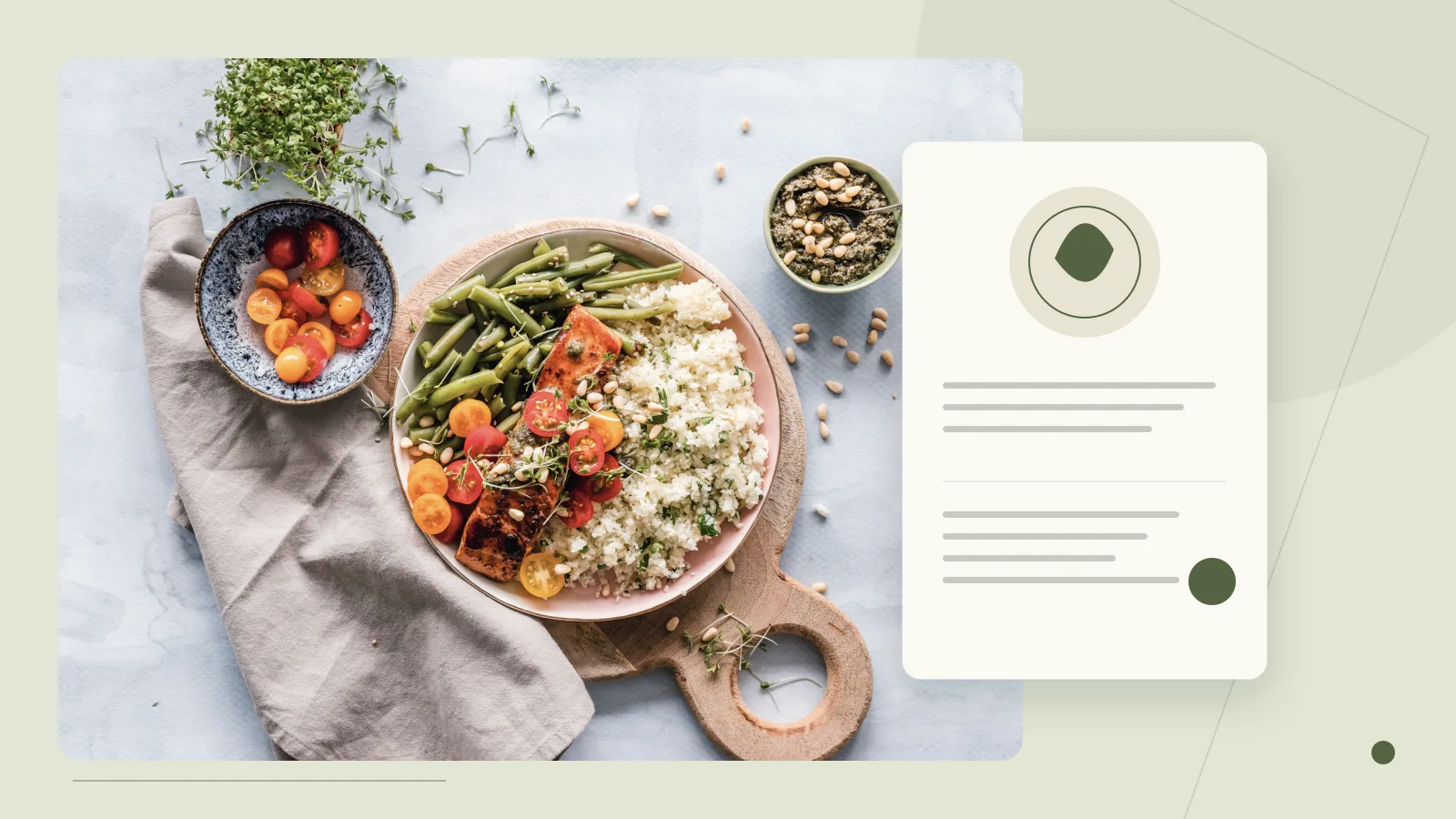
A restaurant menu has three audiences at once
A useful online menu has to work for a diner, for the restaurant team that updates it, and for systems trying to understand what the page represents. Those needs overlap, but they are not identical.
The diner wants names, descriptions, prices, dietary context and an obvious path to reserve or order. The operator needs a menu that can be changed without redesigning the whole site. Search systems benefit when the page has visible text and consistent business information rather than important facts locked inside a photograph.
That is why a menu should not be treated as a decorative PDF upload. A designed PDF may still be useful for printing, but it is a weak only-copy of the menu on a phone. Text becomes hard to resize, links and sections are less usable, and small changes often require replacing the whole file.
Our mobile-menu primer covers the experience side. This article focuses on information structure and structured data.
Build readable HTML before adding schema
Structured data does not rescue an unclear page. Start with the content a person should be able to read without running a script or opening another file:
- meal or menu section, such as dinner, lunch, drinks or tasting menu;
- item name;
- concise description when it adds useful context;
- price or a clear reason the price is variable;
- dietary or allergen information only when the restaurant can stand behind it;
- availability notes when an item is seasonal or limited;
- a link to the reservation or ordering action appropriate to the restaurant.
This structure also creates a maintainable source of truth. A restaurant can change one item or one section without replacing a full image. The same facts can support the website view, accessible navigation, internal search and future integrations.
The key principle is visible truth first, machine-readable annotation second.
Use Restaurant structured data for business facts, not an invented menu feed
Google’s LocalBusiness structured-data documentation supports specific subtypes such as Restaurant. Its example includes fields such as name, address, telephone, opening hours, cuisine, price range and a menu URL. Those fields can give search systems explicit clues about the business represented on the page.
A basic Restaurant graph might describe the organization and point to the current menu page. It should not include information that the visible website contradicts. If the restaurant closes on Mondays, the markup should not claim it is open. If there is only one actual location, the schema should not manufacture several LocalBusiness entities to mirror SEO landing pages.
Google’s structured-data guidance also makes an important distinction: valid markup can make a page eligible for supported search features, but it does not guarantee that a rich result will be shown. Schema is a semantic layer, not a ranking switch.
Keep menu URLs durable even when dishes change
Restaurant websites often accidentally change the menu URL every season: /spring-menu-2026, then /summer-menu-2026, then another PDF with a new filename. That may be useful for archival editorial content, but it is usually a poor primary destination for the current menu.
A more durable pattern is:
| URL | Job |
|---|---|
| /menu/ | Current primary menu hub |
| /menu/dinner/ | Current dinner offering, when a separate page is useful |
| /menu/drinks/ | Current drinks offering |
| /private-dining/ | Event or group dining information |
| dated editorial post | Only when the historical menu itself has lasting editorial value |
The stable menu URL is easier to maintain in the Business Profile, structured data, social profiles and printed QR codes. When dishes change, the content changes without forcing every external reference to change.
If the restaurant genuinely has different menus by location, the menu structure should follow those real operational differences rather than creating near-duplicates for search terms.
A maintained primary URL can keep the customer’s route stable as dishes change.
- 01Approve the item
Confirm names, prices and necessary qualifiers.
- 02Update the current page
Keep an appropriate stable menu URL.
- 03Align the references
Check profile, markup and printed links.
- 04Read as a diner
Verify the live page and intended location.
Connect menu information to the restaurant entity carefully
The restaurant website should make it clear which location a menu belongs to. This is especially important for multi-location businesses where prices, hours or availability differ.
A single-location restaurant can keep the entity relationship straightforward: one Restaurant, one real location, one primary menu URL, one reservation destination. A multi-location group may need a distinct Restaurant entity and location page for each staffed venue, with the menu URL appropriate to that venue.
This is also where ordinary page design matters. Breadcrumbs, location labels and headings help a person understand the relationship before structured data is considered. Markup should reinforce that visible structure.
What structured data can and cannot do for AI search
Google’s 2026 generative-AI optimization guide says established SEO practices remain relevant to generative AI features and explicitly discourages treating new hacks as substitutes for useful content. Structured data can provide explicit semantics, but it does not mean an AI answer must cite or recommend the restaurant.
For a restaurant, the stronger foundation is still:
- accurate business facts;
- crawlable pages;
- a readable current menu;
- real local information;
- consistent URLs and entity details;
- useful images with appropriate context;
- measurement of what visitors do after discovery.
If AI visibility becomes important, measure it as another discovery surface rather than creating a second website for AI systems.
Validate markup and the actual customer path separately
A technical test can confirm that JSON-LD is valid. It cannot confirm that the menu is understandable or that a booking works.
Use two checklists.
Machine-readable check
- schema parses correctly;
- the most specific appropriate business type is used;
- URLs are canonical and live;
- hours and business details agree with the visible page;
- markup does not contain hidden promotional claims.
Human-path check
- menu is readable at 320px width without zooming;
- section navigation works with keyboard and touch;
- important prices and qualifiers are visible;
- dietary statements are reviewed by the business;
- reserve/order actions are obvious;
- the external handoff returns a clear confirmation state.
Those two checks solve different problems. Passing one does not imply passing the other.
A parser cannot prove that a guest can understand the food or complete a reservation.
- JSON parses and identifies the real venue
- URLs and hours agree with visible facts
- Eligibility is not a display guarantee
- Names, prices and qualifiers remain legible
- The location and next action are clear
- A failed handoff is not shown as success
A practical implementation order
For a restaurant rebuilding its search foundations, the order matters more than adding every possible property.
First, create a stable menu page with readable content. Second, establish a clear restaurant/location page and consistent business facts. Third, add or correct Restaurant structured data that mirrors those facts. Fourth, validate the markup. Fifth, test the whole mobile journey. Finally, monitor Search Console, analytics and reservation-provider evidence to see which pages actually contribute to discovery and bookings.
If the menu is still an image-only PDF, adding more JSON-LD is not the first bottleneck. If the website facts are already strong and consistent, structured data can be a sensible next layer.
For the broader relationship between schema, SEO and AI visibility, continue with the GEO research pillar. For local restaurant discovery, use the Richmond Hill and Markham local SEO guide as the wider model.
The goal is not to make the menu look more technical. It is to make one accurate menu easier for people, search systems and the restaurant team to use.